

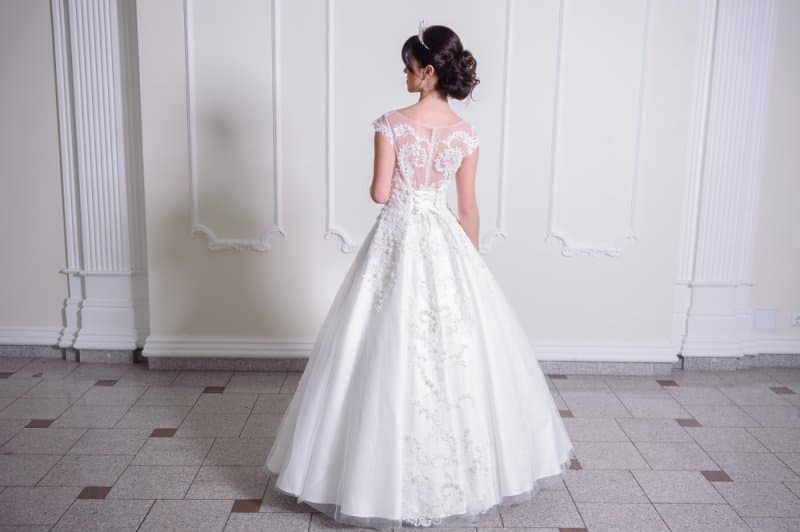
Shopping for a gown without understanding raw materials is an expensive, catastrophic mistake. People obsess over the lace patterns and neckline cuts while completely ignoring the structural foundation holding the entire garment together. If you choose the wrong wedding dress fabrics, you will spend your entire ceremony sweating, suffocating, or fighting heavy wrinkles. You cannot expect a cheap and heavy synthetic material to perform like a breathable and high-end natural fibre.
Must Read: 10 Wedding Packing List Essentials For a Well-Prepared Event
Elite textiles do not just cover the body; they engineer the entire silhouette. A premium material holds its shape under extreme movement, resisting heavy wrinkles and maintaining a rigid, architectural drape. It acts as the structural foundation, dictating exactly how the gown visually behaves under harsh venue lighting and intense camera flash.
Top Pick: Best Wedding Seating Chart Ideas to Have a Perfect Reception
To execute a flawless look, you must lock down the exact material that matches your physical demands. You cannot swap these without altering the fundamental geometry of the dress.
This is an architectural powerhouse. It holds massive, structured shapes and commands extreme visual weight, making it the premier choice for formal, indoor winter ceremonies.
A fluid, liquid-like textile that clings to the body. It demands a flawless shapewear foundation because it hides absolutely zero physical lines or internal seams.
A heavy blended silk that stands away from the frame. It delivers architectural structure without the extreme, suffocating heat retention of traditional heavy satins.
A semi-sheer material that drapes incredibly smoothly. It provides movement without going completely limp, making it a highly forgiving choice for complex, moving skirts.
A stiff and highly structured textile that rustles when you walk. It locks in massive volume and holds rigid pleats better than almost any other natural or synthetic option.
A skin-toned and micro-mesh engineered to hold heavy, beaded embellishments. It allows the visual illusion of floating lace directly on the bare skin without requiring thick, opaque backing.
An extremely elastic knit that stretches and recovers instantly. It prioritises unrestrictive comfort and actively resists wrinkling, making it mandatory for long-haul destination travel.
Do not confuse these two sheer textiles; they behave entirely differently under physical stress. You must deploy the correct one to control the exact volume of the skirt.
| Textile Metric | The Tulle Execution | The Organza Reality |
| Structural Hold | Floats weightlessly and collapses easily unless layered over heavy crinoline. | Highly crisp and rigid; stands away from the body to create extreme volume with fewer layers. |
| Visual Texture | A fine, open-weave net that mimics a delicate, matte honeycomb structure. | A smooth, densely woven sheer sheet that reflects a subtle, high-end sheen. |
| Hemline Finish | Almost always left completely raw; folding and sewing it creates a bulky, ugly ridge. | Must be finished or bound with horsehair braid to prevent immediate fraying. |
You cannot swap these two materials without destroying the intended silhouette of the garment. They serve opposed mechanical purposes.
A satin vs chiffon wedding dress debate comes down to structure. Satin is a densely woven fabric that locks heat in and reflects a lot of light, demanding heavy tailoring to function.
Chiffon is a light layer that requires massive stacking to achieve baseline opacity. It rejects structure, defaulting to a soft, ethereal drape that collapses the second the wind stops.
Lace is not a single category; it is a highly complex woven structure. You must identify the exact lace wedding dress fabric to control the texture and weight of the final piece.
A delicate and flat bobbin lace that sits incredibly close to the skin. It delivers a soft, highly flexible drape that moves seamlessly with the base layer without adding heavy bulk.
A heavy lace built with zero net background. The motifs connect directly to each other, creating a rigid, highly textured architectural finish that stands up on its own.
A traditional net lace where every single floral motif is outlined in a thick, raised cord. It reads as a heavy, applied three-dimensional decoration rather than a flat piece of cloth.
You cannot build a structurally sound, highly functional garment out of cheap, mismatched materials. The success of the entire visual aesthetic relies on locking down the correct wedding dress fabrics before the first pattern is even cut.
Absolutely not. Applying direct heat from a standard iron to raw silk or taffeta will instantly scorch the fibers and leave a permanent, shiny burn mark. You must use a heavy-duty commercial steamer to gently blast the wrinkles out without touching the hot metal to the delicate cloth.
Yes. You cannot wrap a rigid, heavily boned corset in a thin, watery layer of liquid charmeuse. The steel or plastic boning will push through the thin material, exposing every internal ridge. Structured corsetry demands a thick, heavy outer layer like Mikado or duchess satin to mask the internal mechanics.
Polyester is a manufactured plastic extrusion. Under harsh camera flash, it bounces the light back, creating a cheap, high-glare hotspot on the film. Natural silk absorbs and diffuses the flash, rendering a soft, rich luster that looks exponentially more expensive in high-resolution photography.
If a designer packs heavy glass beads onto a delicate illusion micro-mesh, the sheer weight will drag the mesh down, causing it to bag and sag at the collarbone. The fabric must be pulled under extreme tension or backed with a secondary structural layer to prevent the neckline from collapsing.
It is not just a traditional finishing technique. Sewing a stiff, synthetic mesh ribbon directly inside the bottom hem forces the skirt to stand out in a rigid circle. It prevents thin materials like organza or tulle from collapsing inward and tangling directly between the bride's legs while she attempts to walk.
This content was created by AI